

Why Investors Now Diversify Beyond One Market
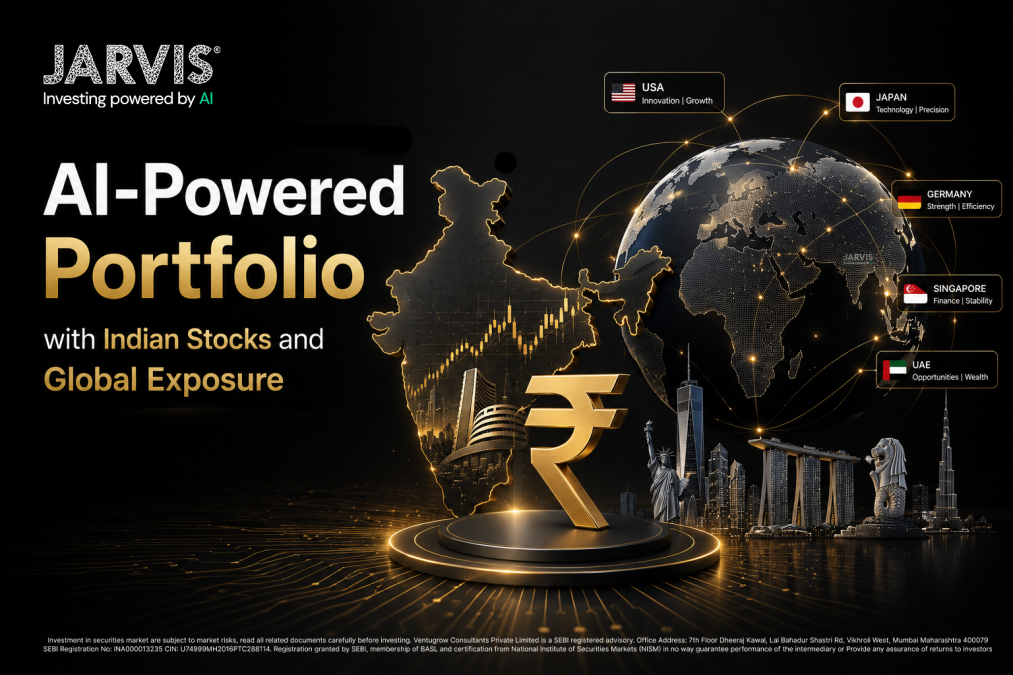
A future-ready portfolio combines exposure to both Indian stocks and global stocks to balance growth opportunities and reduce concentration risk. While India offers strong economic growth, sectors such as Artificial Intelligence (AI), Semiconductors, Renewable Energy, and Global Technology Leaders provide additional diversification opportunities.
Investors focused on long-term wealth creation often allocate investments across multiple geographies, sectors, and asset classes to build a resilient portfolio capable of navigating different market cycles.
People often talk about the idea of a “future-ready portfolio,” but they don’t always follow through with it. Diversification is something that most investors know they need to do. Most people still keep their money in safe places in their own countries, though, so they miss out on a lot of the global investment opportunities that are out there.
Because it costs too much, investors can’t keep ignoring this plan in 2026. People all over the world have changed how they invest a lot in the last ten years. More changes are happening in more places than ever before, and there are more links between markets. Today, if you want to build a truly stable portfolio, you need to invest in both India’s long-term growth story and the bigger global trends that are changing capital markets all over the world.
We’ll talk about why that combination is important, how to think about it in real life, and the best places to be right now.
Why Diversification Beyond Indian Stocks Matters in 2026
Most Indian investors still allocate a large portion of their wealth to domestic assets. While India’s growth story remains strong, relying on a single economy can increase portfolio concentration risk.
This is why global diversification is becoming a core strategy for long-term investors in 2026.
Why Indian Stocks Belong at the Core of Any Forward-Looking Portfolio
No longer is India’s investment case just a guess about a new market. It’s a well-known and generally good chance that big global institutions are actively looking for more of.
Other big rating groups, along with the RBI, believe that India’s real GDP will grow by around 7% each year in FY26 and FY27. In terms of growth, that makes India one of the world’s fastest-growing large economies. The growth isn’t caused by short-term stimuli but by long-term factors.
There is now an Overweight rating on India from Market Weight, up from Market Weight. That’s a 14% rise. The company thinks the Nifty could reach 29,000 by the end of 2026. This is because earnings are growing quickly, the government is keeping interest rates low, and prices are more normal than they are in other Asian markets. The company says that MSCI India will make 14% more money in 2026 than it did in 2025. It really is going faster, and it’s not just because people are being optimistic. The policy has changed.
J.P. Morgan thinks that India’s spending will lift its share of GDP growth to 4.4% by the end of 2026. Demand that has been building up, lower income taxes, and better consumer mood will all make this happen. India has a very large economy, so when domestic consumption goes up, it has a big impact on finance, consumer goods, real estate, and industry.
The “6D framework” is what analysts use to describe India’s appeal: demand, development, demography, digitalization, deregulation, and democracy. You don’t see this kind of mix very often in big emerging markets these days. India is still a popular place for institutional capital from both inside and outside of India to put their money because of its stable government and policies, strong banking system, and efforts to make corporate governance better.
The Sectors Driving India’s Growth in 2026
Not every part is in the same spot. If investors want to do more than just invest in passive indexes, they need to know which parts of the Indian market are most likely to do well this cycle.
Making things is now one of India’s most important areas to invest in again because the global supply chain has become more diverse. Programs that offer incentives based on production have sped up this change. There is already $101 billion worth of electronics and IT hardware that wants to grow to $300 billion worth. Apple and Samsung, two of the biggest companies in the world, have greatly expanded their manufacturing operations in India. This has opened up more opportunities for component suppliers, logistics providers, and other services.
The Indian market for renewable energy is growing quickly. In the first half of 2025, the country added 22 gigawatts of new renewable capacity. This is a 56% increase from the same time last year and the first time in the history of the country that clean energy capacity was higher than fossil fuel capacity. This change to the infrastructure will last for many years, and investors want to keep putting money into the whole chain of clean energy.
Money will flow into the data center market by 2026, worth $5.7 billion. This makes India an important part of the process of building out the world’s AI infrastructure. Goldman Sachs and J.P. Morgan also work with businesses in the defense, consumer goods, and finance industries. Morgan thinks the business is set up well to make more money during this cycle.
Where Global Exposure Adds the Most Value
Picking where to put your money abroad is just as important as picking different places to put your money.
Around the world, the United States is still the main source of technology-driven income growth.
JPMorgan Wealth Management says that the biggest risk for many investors is not having access to AI technology that can change the world. It’s been called a “defining theme” for the stock markets. There are still big changes in the profits of US tech and AI infrastructure companies that are hard to copy with only Indian exposure.
Now, Europe is moving into a better time. Amundi’s May 2026 Global Investment Views say that industries that work with energy efficiency, automation, and data center infrastructure will benefit from Europe’s capital expenditure growth in the second round. These are places where European mid map stocks are still worth a lot less than they used to be.
Differentiating by geography is becoming more and more seen as a must, not a choice. When investing, people should look for markets that are either the strongest overall or have an edge in a certain area. It’s like this because every country is good at different things. People from India who want to invest outside of India should follow this rule just as much as people from other countries who want to invest in India.
Benefits of Building a Portfolio With Indian Stocks and Global Exposure
1. Better Diversification
Reduces dependence on a single market and helps spread investment risk across different regions and opportunities.
2. Access to Global Innovation
Gain exposure to high-growth sectors such as Artificial Intelligence (AI), cloud computing, semiconductors, automation, and renewable energy.
3. Reduced Portfolio Concentration Risk
Investing across multiple markets can help smooth returns during economic cycles and reduce dependence on a single economy.
4. Long-Term Wealth Creation
Combines India’s growth potential with global innovation trends to create a more resilient long-term investment strategy.
5. Currency Diversification
Provides exposure to international currencies and global earnings, helping investors benefit from worldwide economic growth.
Sample Asset Allocation for a Future-Ready Portfolio
A future-ready portfolio balances Indian stocks, growth opportunities with global diversification, stability, liquidity, and inflation protection.
How Jarvis AI Helps Investors Build Future-Ready Portfolios
It is hard to build and manage a portfolio across both Indian and global markets at the same time. It takes discipline and good information to keep an eye on changes in macroeconomic policies, currency movements, earnings trends, and sector rotations across many places.
Invest in Indian & Global Markets
from One SEBI Registered Investment Advisor
That’s exactly what Jarvis Invest AI is meant to do. It gives investors sector-level intelligence, real-time market analysis, and personalized portfolio insights across Indian and global markets investing. This means investors can make smart decisions without having to hire a separate research team. Jarvis AI gives you the analytical clarity that modern investing needs, whether you are adjusting your India allocation, looking for ways to diversify your portfolio internationally, or keeping an eye on portfolio risk in real time. Having the right knowledge is the first step in building a portfolio that is ready for the future. Jarvis AI delivers it.
Conclusion
Building a future-ready portfolio in 2026 requires more than simply investing in familiar companies. Successful investors combine India’s structural growth opportunities with global innovation themes to create diversified portfolios that can navigate changing market conditions. By balancing domestic strength with international exposure, investors can position themselves for long-term wealth creation while managing risk more effectively.