
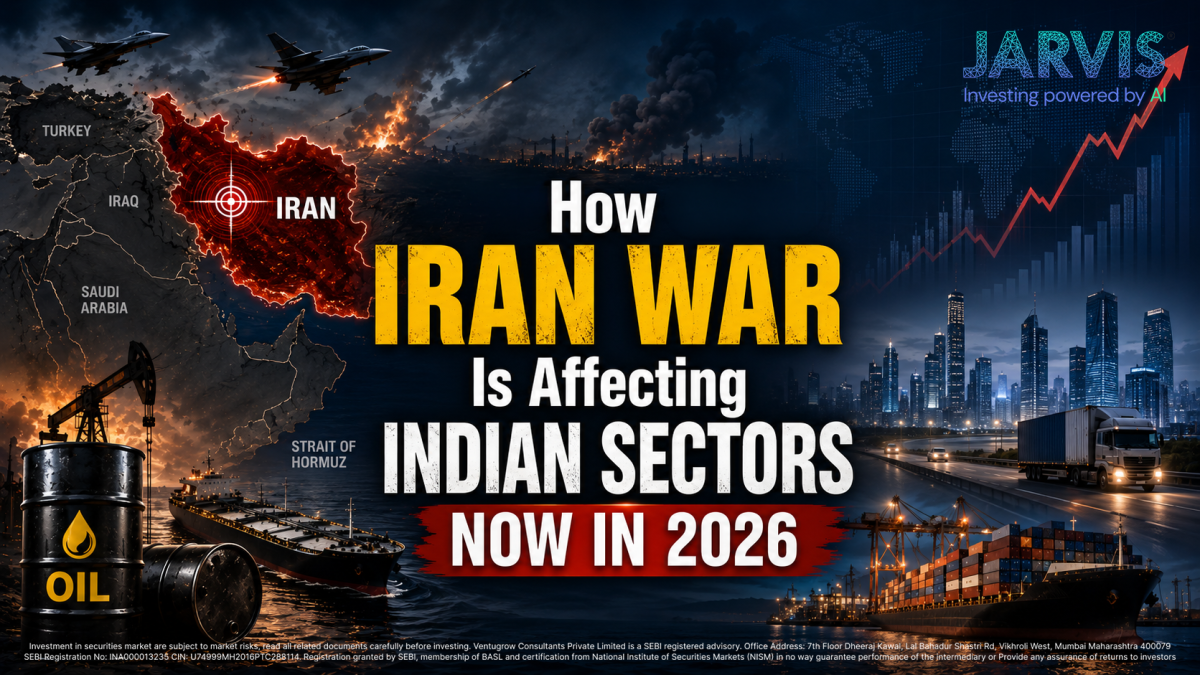
Most small investors are quick to panic when wars break out in other parts of the world. This isn’t the most important question, though. What’s more important is which indian sectors will suffer, which indian sectors will gain, and how long the loss will last. A war between the US and Israel against Iran started on February 28, 2026. It has been one of the worst economic shocks India has seen since COVID-19. And this time, the Prime Minister has stepped in to give every Indian an important message.
PM Modi’s Warning – Save Your Foreign Exchange
In a public speech in Hyderabad, Prime Minister Narendra Modi asked Indians to change how they act for the good of the country in a way that was not common. Modi told people in India to stay home and work instead of traveling abroad because of the war between the US and Israel against Iran, which has caused energy prices to rise around the world and put more pressure on India’s foreign exchange reserves.
Modi also told Indians not to buy gold and not to travel abroad for at least a year if they didn’t have to. He also told farmers to use up to half as much fertilizer. He gave a clear reason for his decision: “Right now, we need to put a lot of emphasis on saving foreign exchange.”
This is clear from the numbers. Indian foreign exchange reserves were $690.69 billion on May 1, down $7.79 billion from the end of March and much less than the $728.5 billion they had before the war. India buys oil from Iran more than any other country in the world. The conflict with Iran has made India even more dependent on oil from Iran.
What’s Happening in Indian Sectors and the Market Right Now
Indian stocks were hit by the war’s economic shockwaves almost right away. Within two days, Indian stock markets fell about 4% because of selling pressure on markets around the world. At the same time, crude oil prices rose more than 15%.
As soon as the conflict started, the energy markets became very unstable. By early March 2026, Brent crude oil prices had gone up 10–13% to around $80–82 per barrel. When Iran closed the Strait of Hormuz, it affected 20% of the world’s oil supplies and large amounts of liquefied natural gas (LNG). Since then, Brent has gone up even more, now staying between $110 and $120 per barrel. This makes India’s monthly import bill billions of dollars higher.
So far in 2026, foreign portfolio investors have taken $23.14 billion out of Indian stocks. This is more than the all-time high amount of money that was sold in 2025. In the meantime, the Indian Rupee broke through 92/USD in March 2026. This was mostly because of inflation in other countries and capital flight around the world. To protect the currency, the RBI is said to have used about $12–15 billion from its foreign exchange reserves.
Key Analytics: Performance by Indian Sectors and Market
The war has changed the picture, but here’s how key sectors and the market as a whole have done over the last six months and a year.
| Sector / Index | 6-Month Return | 1-Year Return | War Impact |
| Sensex (Benchmark) | –4% to –6% | ~0–2% | Broad correction |
| Defense (Nifty Defense Index) | +15% to +20% | +25–30% | Strong beneficiary |
| Upstream Energy (ONGC, Oil India) | +18–22% | Positive | Direct beneficiary |
| Aviation (IndiGo, Air India) | –12% to –18% | Negative | Under severe pressure |
| Paints & Chemicals | –5% to –10% | Mixed | Margin pressure from crude |
| FMCG & Logistics | –3% to –5% | Low single digits | Higher freight/packaging costs |
| Renewable Energy | +10% to +15% | Positive | Structural re-rating underway |
| Gold (Safe Haven) | +20%+ | +30%+ | Surging on safe-haven demand |
The returns given are based on data that was available in May 2026.
History is important because it gives us a reassuring alternative story. A study of six major geopolitical events that happened between 1990 and 2026 found that the Sensex averaged 16% returns in the first month after one of these events, 27% returns in three months, and 37% returns six months after the event. Investors with a lot of experience see this drop as a window, not a wall.
Indian Sectors Under Pressure, and Why
Aviation: This is perhaps the hardest-hit sector. 30–40% of the costs of running an airline like IndiGo are for aviation turbine fuel, and the rise in crude oil prices is putting a lot of pressure on their profit margins.
Paints and Chemicals: Paint manufacturers use a lot of crude-linked derivatives as raw materials; they make up about 20–25% of their total input costs. If the price of crude oil gets closer to $100 per barrel, it could put a lot of pressure on margins. This is similar to what happened during the conflict between Russia and Ukraine, when the price of Brent crude rose to $112 per barrel and caused about 8% inflation in input costs.
FMCG and Logistics: Rising prices for diesel and crude derivatives are making freight and packaging costs go up for everyone. This makes it harder for consumer goods companies to make money on margins that are already very low.
Agriculture and Food Exports: India’s basmati rice exports to the Middle East have been slowed down because members of the Indian Rice Exporters Federation were told to stop all new shipments because they couldn’t get insurance for ships going to the Gulf.
Indian Sectors That Are Gaining Ground
Defense sector stocks: The war has created a fundamental chance for American defense companies that can provide scalable, low-cost, and electronic warfare capabilities. This is because warfare is shifting more and more toward AI-enabled autonomous platforms, drone swarms, and cyber warfare. Stocks like HAL, BEL, Mazagon Dock, and Bharat Dynamics have gone up 3–8% just on days when conflicts got worse.
Few Defence Stocks to Watch Now
| STOCK NAME | CMP | REASON |
| NIBE | ₹1,062.30 | Nibe Limited is an integrated manufacturer fabricating critical parts for the defence sector |
| Bharat Electronics Ltd (BEL) | ₹426.55 | Radars, electronics, and defence systems. |
| Bharat Dynamics Ltd (BDL) | ₹1,308.70 | Missiles and ammunition. |
| Larsen & Toubro (L&T) | ₹3,921.00 | Systems integrator with strong defence and heavy engineering exposure. |
| Mazagon Dock | ₹2,443.60 | Need more ships for war |
| Data Patterns | ₹3,752.30 | Specialised electronics and software for defence. |
Upstream Oil & Gas: Oil companies like ONGC and Oil India are making more money because the price of crude oil is going up. This is a classic example of a “relative beneficiary” in an oil price spike. All together, stocks in the energy sector have gone up 21.7% since February.
Few Oil and Gas Stocks to Watch Now
| Company | Ticker | Key Strength | FY27 Catalyst |
|---|---|---|---|
| Oil and Natural Gas Corporation | ONGC | Market leader with dominant brand moat | FY27 revenue recovery and margin expansion |
| Oil India Limited | OIL | High ROE and consistent earnings growth | New product launches driving market share |
| Hindustan Oil Exploration Company Ltd | HINDOILEXP | Dominant market share and wide distribution | Capacity addition reaching revenue maturity |
| Selan Exploration Technology Limited | SELAN | Proprietary technology and IP advantage | Export order book ramp up accelerating |
Renewable Energy: Every time there is an oil crisis, the need for clean energy grows. The conflict in Iran has made renewable energy even more important, since solar and wind power can make a country less dependent on supply problems from other countries. As the price of oil has changed, renewable energy has become much more cost-effective. This structural re-rating is good for companies like Tata Power and Adani Green.
Few Renewable Energy Stocks to Watch Now
| Company | Symbol | Key Strength | FY27 Catalyst |
|---|---|---|---|
| Adani Green Energy Ltd | ADANIGREEN | Market leader with strong brand moat | FY27 revenue recovery and margin expansion |
| NTPC Ltd | NTPC | High ROE and consistent earnings growth | New product launches and market share gains |
| Tata Power Company Ltd | TATAPOWER | Dominant market share and distribution | Capacity addition reaching maturity |
| JSW Energy Ltd | JSWENERGY | Proprietary technology and IP advantage | Export order book ramp up |
| Suzlon Energy Ltd | SUZLON | Defensive earnings with dividend yield | Policy tailwind and government contract wins |
| Inox Wind Ltd | INOXWIND | Fastest growing in segment | Profitability inflection point |
| NHPC Ltd | NHPC | Asset light model with high ROCE | Digital transformation driving efficiency |


What Should Investors Do Now?
Goldman Sachs prefers sectors like financials, staples, and telecom that are less affected by oil shocks. They are also positive on defense and energy as structural themes. It is still being cautious about cyclicals like autos, durable goods, and NBFCs.
In its base case, Morgan Stanley thinks the Sensex will reach 95,000 by December 2026. It points to strong policy support, rising earnings, and attractive relative valuations.
Wars can mess up markets in the short term, but India’s long-term growth story is still very much intact. It has a strong GDP, a young consumer base, and years of work to build up its infrastructure. PM Modi’s call isn’t just a way to save foreign exchange reserves; it also shows that the government is taking action to handle the crisis. For investors, the plan is simple: shift your money toward defense, upstream energy, and renewables; be careful with aviation and consumer sectors that are linked to crude; and see market dips as chances to buy instead of times to sell.
Patience has paid off in all of the last 30 years’ worth of geopolitical shocks. It’s not likely to be different this time.
Conclusion
Wars create noise. Some investors are patient, though, and they see opportunities in these things. There’s no doubt that the conflict with Iran has changed the playing field. Paint and aviation companies are losing money, while defense, upstream energy, and renewables are quietly getting richer for people who saw this coming. PM Modi’s call for people to save foreign exchange is not a sign of weakness; it shows that the government is planning to stay in power for a long time. You should do the same.
India has been through a lot of geopolitical shocks in the past 30 years, including Kargil, 9/11, the 2008 financial crisis, and the conflict between Russia and Ukraine. But the Sensex has come out stronger each time. It won’t be any different this time.
Being brave isn’t enough to make it through a volatile market, though. It comes down to having the right kind of smarts on your side. That’s where Jarvis Invest comes in. Because it uses AI, Jarvis Invest constantly checks over 1,500 stocks, keeps an eye on real-time risk signals, and rebalances your portfolio to protect your money during these types of geopolitical and macroeconomic shocks.
Jarvis makes it easy to invest in uncertain times by getting out of sectors that are sensitive to crude oil or finding defense and renewable energy opportunities before everyone else does.
Don’t let global chaos derail your financial future. Let Jarvis Invest help you navigate the storm and invest with clarity, not fear.