
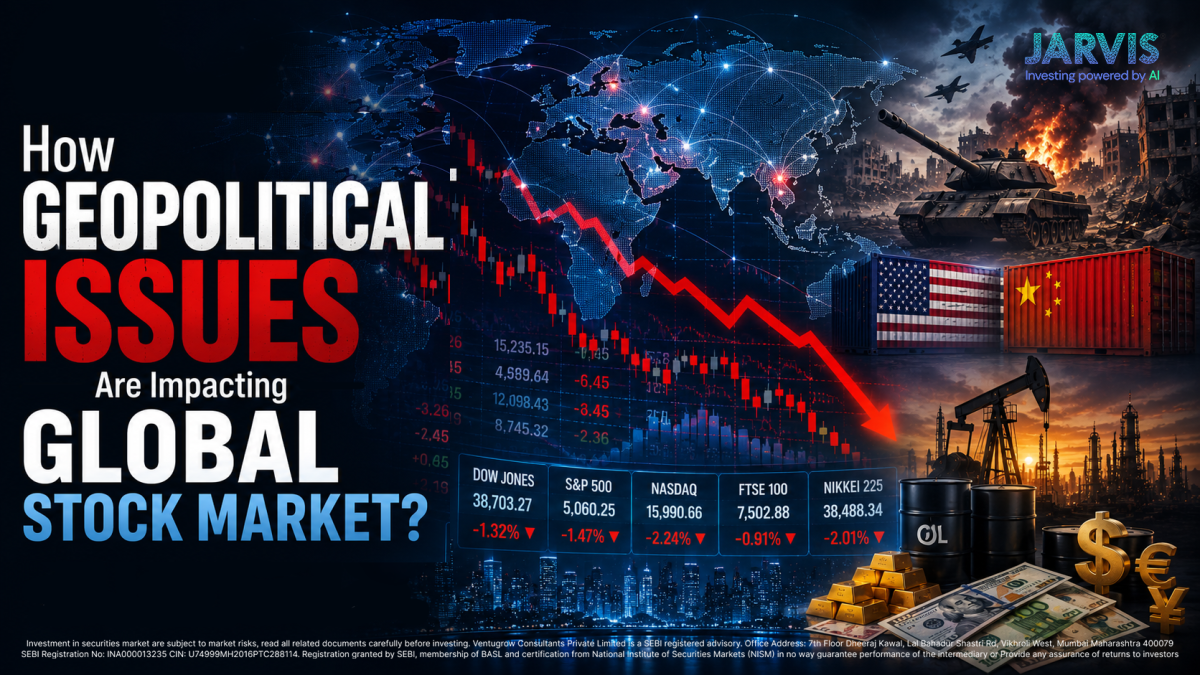
Events midway across the world can hit your portfolio hard, especially during periods of rising uncertainty in the global stock market.In mid-May 2026, conflicts between the US, Israel, and Iran have created fresh uncertainty. These eruptions typically affect daily life and investments in equal measure.
The Middle East supplies around 20% of global seaborne oil. The Strait of Hormuz serves as a vital choking location. Disruptions here reduce supply fast, as prices rise, inflation follows, central banks adjust policies, and markets fluctuate.
India feels this pressure strongly. We import most of our oil. Moreover, higher costs put pressure on the rupee. They push up domestic fuel prices as inflation worries grow and the RBI stays cautious. Growth faces challenges. Investors in India see direct effects through higher bills and volatile stocks.
Markets dislike unforeseen events and volatility fluctuations. Safe assets gain. Risky stocks suffer. Knowing this detailed blog can help you respond with a calm strategy instead of fear.
What Exactly Is Happening in the Middle East Right Now for Global Stock Market?
Tensions escalated sharply in late February 2026. US and Israeli strikes hit Iranian targets. Iran responded by restricting traffic in the Strait of Hormuz. Shipping normally slowed down. Supply chains faced real, unexpected events.
Ceasefire efforts appeared and faded. The situation remains at risk until mid-May.
- Partial disruptions continue to occur.
- Naval risks still exist.
- Related issues in the Red Sea add complications.
- Oil prices reacted fast.
- Brent crude climbed above $100 per barrel. It peaked even higher earlier.
Supply losses hit 10 million barrels per day or more at times. However, this ranks among the largest shocks ever recorded.
Global stocks turned unpredictable. Indices dropped on escalation news. They recovered somewhat on de-escalation signals. Europe and Asia felt more severe pain due to energy imports. The US showed more resilience thanks to domestic output.
Risk-free buying lifted the US dollar and gold. Volatility indices jumped. These moves appear in daily trading and company updates.
How Do Disrupted Oil Routes Create Stress Across Economies?
The process is very straightforward. Ships avoid risks in the Strait of Hormuz. They take longer routes around Africa. However, travel time increases, fuel consumption rises, and insurance costs surge. Available supply drops.
Energy producers see immediate gains. Higher prices support revenues. Shares of major oil companies strengthen. Downstream businesses suffer. Airlines face higher fuel bills. Logistics costs climb. Manufacturers pass on expenses or absorb hits to margins.
Inflation spreads wider. Central banks delay easing. Borrowing stays expensive. Growth stocks face valuation pressure. Emerging markets deal with currency weakness and import costs.
In India, the Nifty reacted with selling. Energy expenses hurt earnings. Foreign investors grew cautious. Defence and domestic energy names provided some support. Rupee swings added volatility.
Markets trade on future expectations. Positive diplomacy news sparks rallies. New threats trigger sell-offs. This pattern tests patience but rewards focus on fundamentals.
What Commodity Spikes Have Emerged, and Why Do They Affect You?
Energy leads the upward trend, and other commodities rise too. Risk premiums lift prices across the board.
- Energy: Brent and related products stay high. World Bank forecasts show sharp increases for 2026.
- Precious metals: Gold serves as a classic investment hedge. It rises during fear. Silver moves in tandem at times.
- Base metals and agriculture: Copper, aluminium, and fertilizers show gains or volatility. Food-related items add cost pressures globally.
These spikes matter. Input costs go up for businesses. Inflation expectations shift. Bond yields move. Future earnings face higher discount rates. Stock prices adjust, especially in sensitive sectors.
Indian investors notice higher gold demand and selective commodity plays. Hedges become useful. Yet broad increases complicate budgets and planning at every level.
How Has the Defence Sector Shown Strength During These Global Stock Market Tensions?
Many sectors face challenges. Defence Sector Stocks often performs better. Governments increase spending when risks rise. They rebuild stocks and upgrade forces.


Reasons for resilience:
- Contracts are usually long-term and reliable.
- Demand stays steadier than in consumer sectors.
- Global budgets were rising already. Tensions accelerate the pace.
US contractors like Lockheed Martin and RTX gained from news and backlogs. The sector outperformed broader indices at points.
India mirrors this trend. Firms such as HAL, BEL, and others attract interest. Defence allocations grow. Self-reliance initiatives push forward. The Nifty Defence index showed relative outperformance during volatile periods.
This looks structural. Analysts point to multi-year opportunities. Persistent risks worldwide support the theme. Still, smart investors check valuations and execution closely.
What Are the Broader Economic Implications for Growth and Policy?
High energy costs create difficult conditions. Growth slows. Inflation lingers. Policymakers balance competing goals.
Import-heavy countries like India see wider deficits. The rupee weakens under pressure. Inflation complicates rate decisions. Corporate profits face tests in oil-sensitive areas.
Main effects:
- Supply chains adjust slowly with higher costs.
- Rate-sensitive sectors lag.
- Defensive themes draw more capital.
Past events offer valuable lessons. Shocks cause short-term stocks. Markets adapt once clarity emerges. Duration of disruptions will shape the final impact.
How Are These Tensions Affecting Emerging Global Stock Market and India Specifically?
Developing markets are impacted more than advanced countries. They depend heavily on imported oil. India is one of the worst affected.
We import more than 85% of our crude oil. Rising prices are adding to the current account deficit. The rupee is already declining, and inflation is rising fast due to costly imports.
Key effects in India:
- Petroleum and shipping costs have increased considerably.
- Companies in chemicals, airlines, and logistics are experiencing lower profits.
- The RBI must control inflation and support growth simultaneously.
- Foreign investors are becoming less confident.
Defence Sector Stocks and green energy stocks have given some support. But the Nifty and Sensex still react strongly to global oil prices. Indian investors should track both world oil news and local government actions.


What Can History Teach Us About Geopolitical Oil Shocks?
Here is what you need to learn.
- Oil prices rose sharply.
- Inflation increased.
- Stock markets fell in the beginning.
- The green energy sector and defense sectors did well.
- Markets usually recovered once the crisis eased.
- Short-term uncertainty created buying chances for calm investors. But long conflicts caused more serious and lasting damage.
- The length of the crisis matters most.
- Quick solutions cause less pain.
- Long tensions bring higher inflation and slower growth.
How Are Central Banks Responding to This Crisis?
Nowadays, central banks are facing many challenges. They must deal with rising inflation without slowing down the economy.
The hopes of a US Federal Reserve rate cut are being delayed. European banks are worried about high energy costs. In India, the RBI is watching imported inflation closely.
Current approach:
- Most banks are holding rates or cutting them slowly.
- They are keeping a close watch on oil prices.
- They are speaking clearly to calm the markets.
If oil prices continue to be high, interest rates may remain high for longer. As a result, this puts pressure on stock prices, especially growth companies and firms with heavy debt.
What Role Does Renewable Energy Play Amid These Oil Shocks?
Let’s see the investment angle:
- Oil prices show the risks of depending on imports.
- Long-term money is moving into clean energy.
- Companies in green hydrogen, solar, and electric vehicles are gaining.
This crisis may accelerate the shift from fossil fuels. Investors can look at both old energy and new renewable options for a better balance.
How Can Investors Manage Risks in This Volatile Environment?
Smart risk management is very important now. So, investors should follow these practical steps:
- Keep some money in safe places like gold or liquid funds.
- Buy good stocks slowly during big market falls.
- Spread your investments across different sectors.
- Keep some cash ready for good opportunities.
- Check your portfolio once every month.
Avoid big, risky investments in uncertain times. You just focus on strong companies with low debt and good cash flow. Using professional tools can help you make decisions without emotions.
How Should Investors Build Resilient Strategies in Global Stock Market?
Start with an assessment. Check your exposure to energy costs and cyclical sectors. Reduce vulnerability where possible.
Diversify thoughtfully. Blend quality defenses with selective growth that includes commodity hedges when suitable. You just need to focus on companies with strong balance sheets and pricing power.
Rebalance regularly. Use professional tools to match moves with your goals and risk level.
Why Technology and Expert Advice Matter More in Volatile Times
Geopolitics remains unpredictable. No one forecasts every turn. Emotions rise with news. Clear thinking becomes essential.
Data-driven platforms cut through daily noise. They highlight probabilities and fundamentals. This approach separates lasting shifts from temporary scares.
The 2026 events reveal patterns. Oil routes drive commodity moves. Defence benefits from spending. Markets rotate between fear and opportunity. Prepared investors manage risks better.
Wrapping Up!
Take control of your investments today. Jarvis Invest stands ready as India’s leading AI-powered SEBI-registered equity advisor. It scans geopolitical developments, commodity flows, sector trends, and your personal profile in real time. You receive clear, unbiased recommendations tailored to your needs.
In periods of oil spikes and defense tailwinds, Jarvis AI helps identify resilient opportunities while guarding against inflation and volatility. It adapts quickly as events change. Many investors rely on it to build steady wealth aligned with their dreams. Visit Jarvis Invest now. Equip yourself with intelligent strategies and long term portfolio creation for uncertain times.