

For most consumers, the festive season means discounts, flash sales and packages arriving at the doorstep. For logistics companies, it means something very different: the biggest stress test of the year. For investors tracking logistics stocks, this period reveals how effectively companies handle higher delivery volumes while managing costs and maintaining service quality.
As e-commerce, quick commerce and direct-to-consumer brands continue expanding beyond India’s metros, every additional order eventually needs to be stored, sorted, transported and delivered. This makes logistics stocks in India an interesting space to watch as festive demand gathers momentum. The bigger question, however, is whether the current e-commerce boom can translate into a sustainable earnings cycle for logistics companies or whether the sector is simply preparing for another temporary festive spike.
E-Commerce Is Creating a Bigger Logistics Opportunity
India’s e-commerce logistics market has already reached significant scale. According to a SEBI-filed industry assessment, e-commerce logistics excluding grocery handled around 4.9–5.3 billion shipments in FY2025, after growing at 28 – 31% over the preceding five financial years. The same assessment projects volumes could reach 15–16 billion shipments by FY2030, implying a potential 23 – 27% CAGR. That growth is important because logistics companies do not need consumers to buy more expensive products to benefit. They need more orders moving through the network. And India’s consumption story is increasingly becoming a logistics story.
Festive Demand Could Be the Next Catalyst
The 2026 festive season is expected to be particularly important for the sector. Datum Intelligence estimates festive e-commerce GMV could reach ₹1.50 – 1.55 lakh crore, up around 25 – 29% from approximately ₹1.20 lakh crore in 2025. That does not automatically translate into the same growth in logistics revenues. But higher order volumes mean more parcels, more warehouse activity, more sorting requirements and greater demand for last-mile delivery.
Logistics companies are already preparing for the increase. Industry reports indicate that companies are adding temporary workers, expanding storage capacity and increasing operational flexibility ahead of the festive peak. The interesting shift is that the festive opportunity is no longer restricted to Mumbai, Delhi or Bengaluru.
Tier-2 and Tier-3 Cities Are Changing the Game
India’s next logistics growth cycle could come from the country’s smaller cities. E-commerce companies are increasingly expanding their reach into Tier-2 and Tier-3 markets, creating demand for logistics networks that can deliver smaller shipments across more dispersed locations. Amazon, for example, has expanded its fulfilment and delivery infrastructure across 120 cities, including new locations such as Raipur, Ranchi and Varanasi.
For logistics companies, this creates both an opportunity and a challenge. More locations mean a larger addressable market, but they also require better route planning, warehouse utilisation and last-mile economics.
Delhivery Shows What Operating Leverage Can Look Like
Among the listed logistics stocks in India, Delhivery offers an interesting example of how rising volumes can eventually translate into better economics. In Q3 FY26, Delhivery reported record festive-season Express Parcel volumes of 295 million shipments, up 43% year-on-year. Revenue from services increased 18% year-on-year to ₹2,798 crore, while adjusted EBITDA reached ₹147 crore, with the company attributing improved profitability partly to operating leverage and network efficiency.
This is an important distinction for investors. The logistics story is not simply about delivering more packages. It is about whether companies can deliver those additional packages more efficiently. If volume grows faster than costs, margins can expand. If costs rise at the same pace as volumes, higher shipments may not create much value for shareholders.
Blue Dart Highlights Another Side of the Opportunity
Blue Dart is another company investors can watch when studying the best logistics stocks in India. The company reported FY2025 – 26 revenue from operations of ₹6,141 crore, compared with ₹5,720 crore in the previous financial year. Blue Dart attributed the growth environment partly to digital commerce and continued momentum in B2B surface express services.
Its business also highlights why logistics should not be viewed purely through the e-commerce lens. Express delivery, B2B shipments, healthcare, international logistics and premium time-sensitive deliveries can provide different growth drivers and potentially diversify dependence on festive consumer demand.
Logistics Stocks in India To Watch Now
India’s logistics opportunity extends across express delivery, road freight, warehousing, rail transportation and ports. For investors tracking logistics stocks, the key is to identify which companies can convert higher cargo volumes into stronger margins, cash flows and returns on capital.
1. Transport Corporation of India -TCI

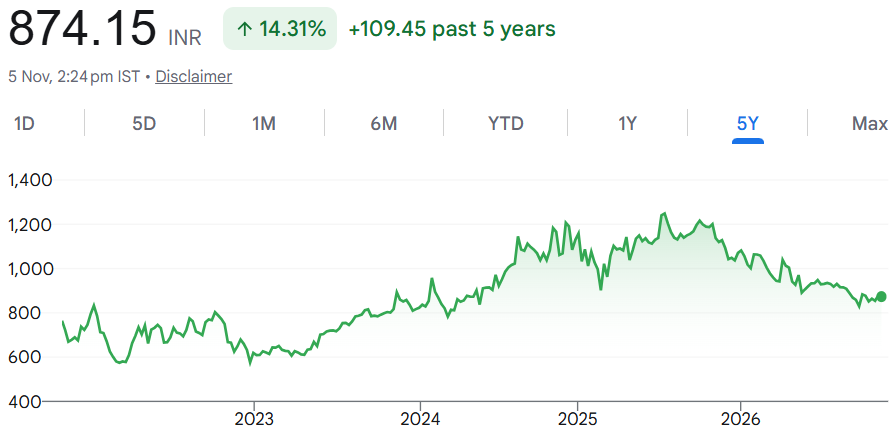
TCI offers exposure to integrated freight, supply-chain solutions and coastal shipping. Its Q2 FY27 consolidated revenue, as presented in its earnings release, increased 14.8% to ₹1,397.9 crore, while EBITDA rose 8.3% to ₹175.9 crore and profit after tax increased 3% to ₹116.9 crore. Revenue growing faster than earnings makes profitability an important monitoring point.
The company also completed a ₹150 crore buyback at ₹960 per share, covering 15,62,500 shares, with extinguishment disclosed on 2 November 2026. This is a completed corporate action.
WHY WATCH THIS STOCK: A diversified logistics business with growing revenue and shareholder distributions. The next test is whether profit growth catches up with business expansion.
2. TCI Express

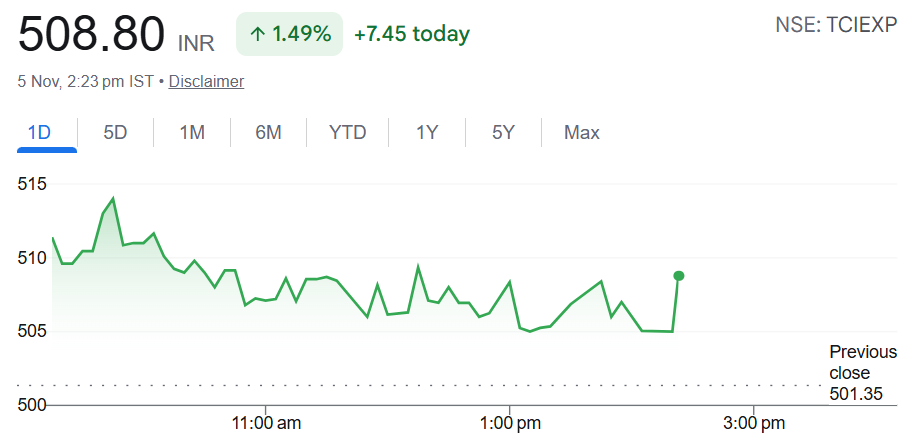
TCI Express provides time-sensitive B2B express distribution, serving industries such as pharmaceuticals, automotive components and textiles. Its Q2 and H1 FY27 results were scheduled for consideration on 5 November 2026, with an earnings call scheduled for the same day. I could verify the schedule, but not a published results outcome in the sources retrieved.
WHY WATCH THIS STOCK: The upcoming disclosure can show whether shipment growth, pricing and network utilisation are improving profitability. Investors should examine volume growth and operating margins together before treating festive demand as evidence of a recovery.
3. Mahindra Logistics
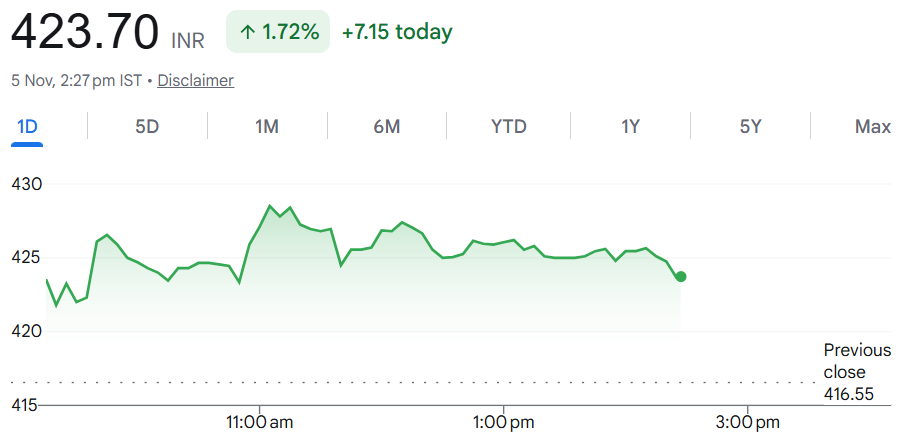
Mahindra Logistics’ latest results strengthen its turnaround case. In Q2 FY27, consolidated revenue increased 24% to ₹2,095 crore, EBITDA rose 46% to approximately ₹124 crore, and PAT reached ₹26.2 crore. Contract logistics revenue grew 28%, while its express subsidiary achieved its first EBITDA-positive quarter following acquisition.
WHY WATCH THIS STOCK: Improving express operations could support group profitability alongside growth in contract logistics. Investors should track whether the express business sustains its improvement and whether stronger earnings translate into cash generation.
4. Allcargo Logistics

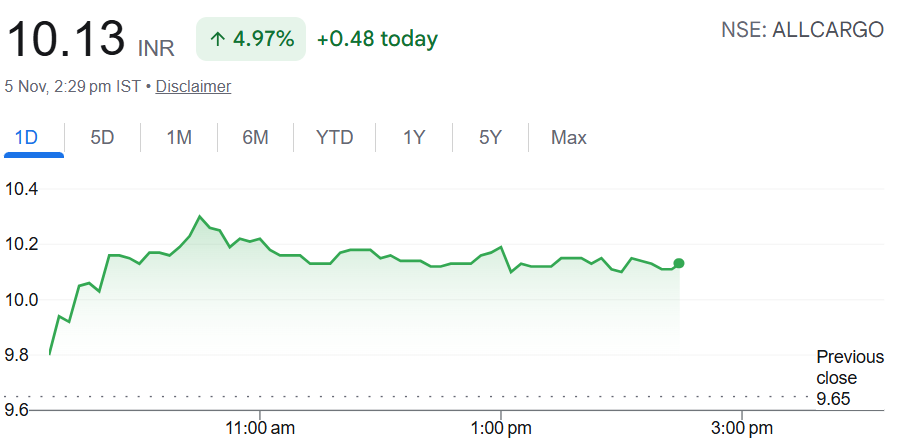
Allcargo’s restructuring has changed the business investors are evaluating. Its international supply-chain undertaking was demerged into Allcargo Global, while the domestic restructuring brought express and contract logistics operations together. The scheme became effective on 1 November 2025, making comparable, restated financial statements important when assessing growth.
The company’s November 2026 earnings release reported 7% revenue growth and 31% EBITDA growth for H1 FY27, with PAT of ₹33 crore.
WHY WATCH THIS STOCK: the investment case centres on domestic operating integration, pricing discipline and better capacity utilisation. Investors should assess whether the improvement continues beyond seasonal demand.
5. VRL Logistics

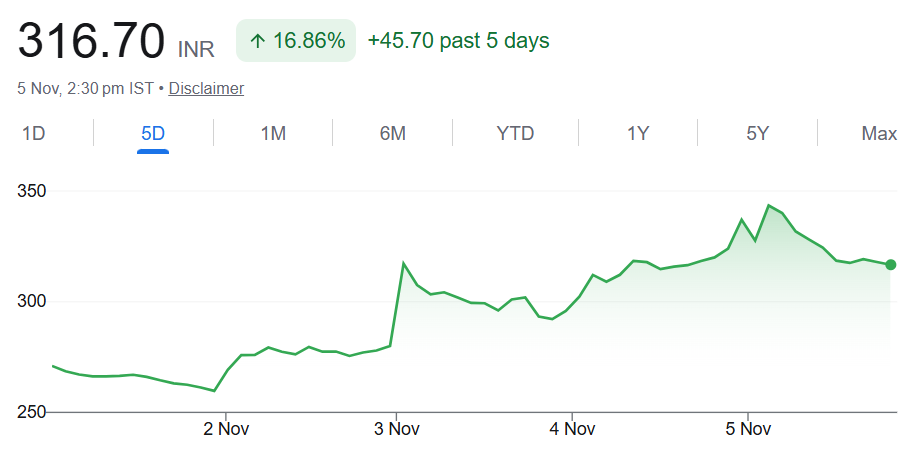
VRL’s Q2 FY27 results showed strong earnings momentum. Revenue from operations increased 20.7% to ₹961.92 crore, while net profit rose to approximately ₹102.97 crore, compared with ₹49.89 crore a year earlier. Results were approved on 2 November 2026.
WHY WATCH THIS STOCK: Profit growing substantially faster than revenue makes VRL an operating-efficiency story worth examining. The key questions are how much improvement came from volumes, freight rates and costs – and whether margins remain resilient as the comparison base becomes stronger.
6. Container Corporation of India – CONCOR

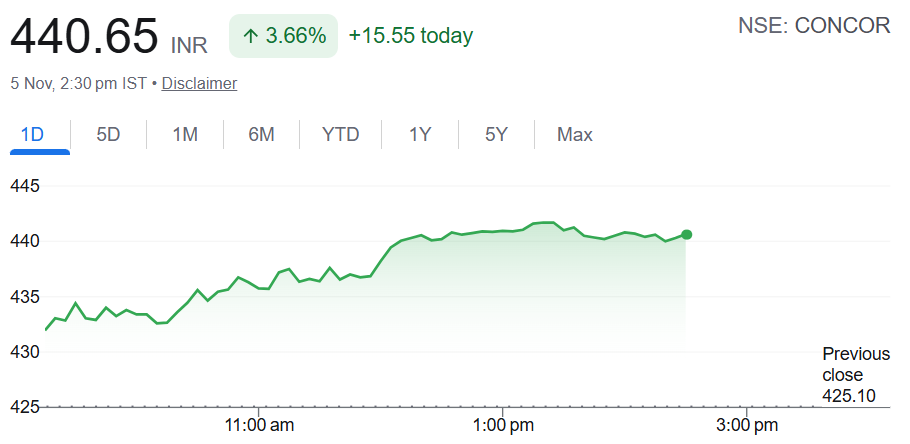
CONCOR provides exposure to containerised rail logistics. Q2 FY27 revenue from operations increased only 0.8% to ₹2,378.57 crore, while consolidated net profit declined approximately 6.9% to ₹353 crore. The board declared a ₹1.90-per-share second interim dividend, with 11 November 2026 as the record date.
WHY WATCH THIS STOCK: CONCOR belongs on a watchlist for evidence of volume and profitability recovery. Investors should monitor domestic and export-import traffic, realisations and operating costs; the dividend alone does not establish an improving earnings outlook.
7. Gujarat Pipavav Port

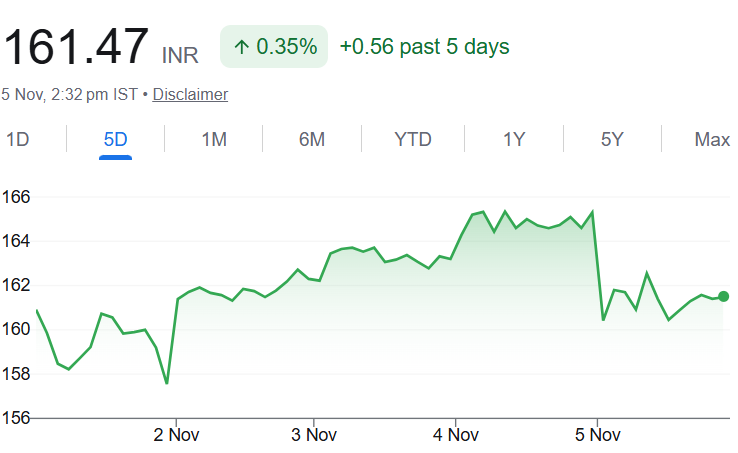
Gujarat Pipavav reported Q2 FY27 container volumes of approximately 1,92,000 TEUs, versus 1,64,000 a year earlier. However, dry-bulk and liquid-cargo volumes declined, showing why investors need to examine the cargo mix alongside total activity.
On 4 November, the board declared a ₹3-per-share interim dividend, with 12 November 2026 as the record date. A separate disclosure reported a comfort letter for processing its concession-extension proposal; this should not be interpreted as final extension approval.
WHY WATCH THIS STOCK: Container growth and concession developments are the main monitoring points.
8. Adani Ports and Special Economic Zone

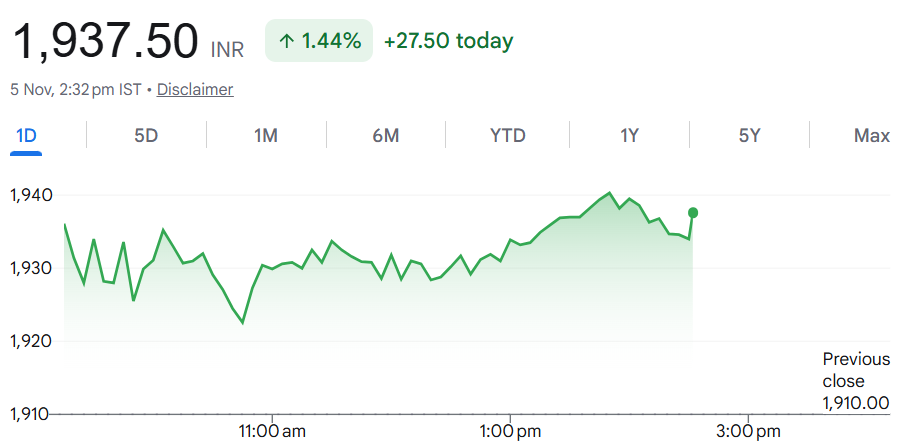
Adani Ports reported Q2 FY27 consolidated revenue growth of 24% to ₹11,340 crore, EBITDA growth of 23% to ₹6,807 crore, and PAT growth of 18% to ₹3,682 crore. Logistics revenue increased 21%, reflecting the expansion of its integrated transport network.
The company raised FY27 revenue guidance to ₹44,000 – ₹46,000 crore and EBITDA guidance to ₹26,000 – ₹27,000 crore, alongside higher capital-expenditure guidance.
WHY WATCH THIS STOCK: Growth across ports, logistics and marine services broadens its earnings drivers. Investors should assess project execution, debt and returns on the expanding asset base.
9. Blue Dart Express

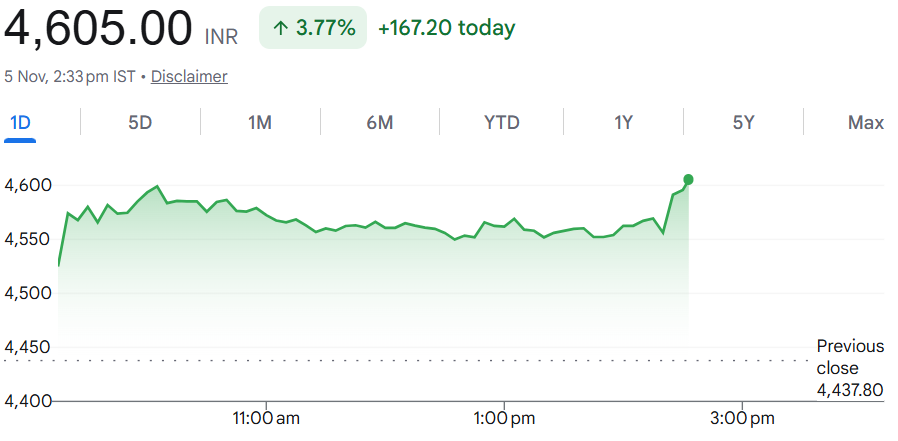
Blue Dart announced several developments in October 2026: International Parcel Connect, an India Post partnership to extend delivery reach, and an MoU with NCRTC to explore express-parcel movement on the Delhi–Meerut Namo Bharat corridor. The rail initiative remains exploratory.
WHY WATCH THIS STOCK: These initiatives could expand access to domestic and cross-border customers. The financial test will be whether additional business improves network utilisation and margins. Its Q2 FY27 results meeting was scheduled for 6 November 2026, so those results were still pending at this research date.
10. Delhivery


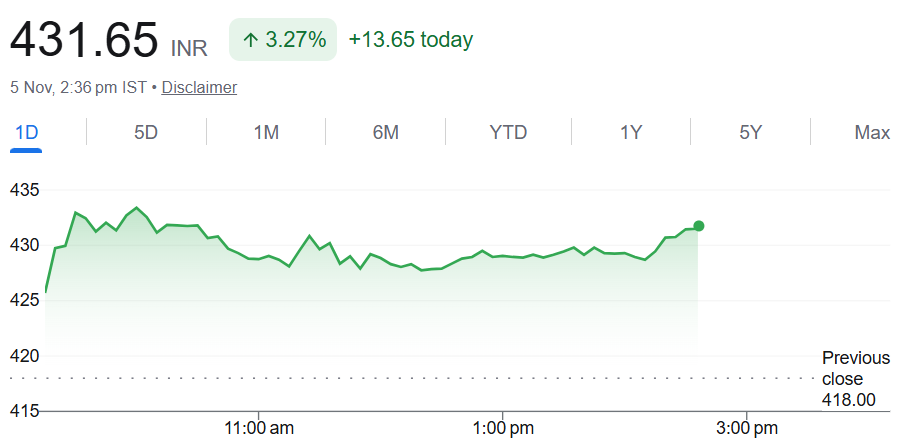
Delhivery’s Q2 FY27 update provides a direct link to the e-commerce logistics theme. Express-parcel volumes increased 32% to 325 million shipments, while part-truckload volumes grew 14% to 5.45 lakh tonnes. Revenue from services increased approximately 20% to ₹3,066 crore.
Adjusted EBITDA reached ₹123 crore, representing a 4% margin, while reported EBITDA was ₹205 crore and consolidated PAT was approximately ₹41 crore.
WHY WATCH THIS STOCK: Higher parcel volumes, pricing revisions and network utilisation could support further margin improvement. Investors should distinguish reported from adjusted profitability and monitor fuel, labour and integration costs.
AI Is Becoming Part of the Logistics Story
There is another development quietly changing the sector: artificial intelligence. Logistics companies are increasingly using AI and data to forecast demand, optimise routes, manage capacity and resolve delivery exceptions. This becomes especially important during the festive season, when shipment volumes can rise sharply within a short period.
For investors interested in stock market AI, this creates an interesting connection between two major themes: e-commerce growth and technology-driven logistics efficiency.
The companies that can combine network scale with better data and automation may have an advantage over businesses that simply add trucks, warehouses and delivery personnel whenever volumes rise.
But Investors Should Watch the Margins
A growing logistics market does not automatically mean every logistics stock will deliver strong returns. The sector remains highly competitive, and higher fuel costs, employee expenses, warehouse costs, discounts and pricing pressure can absorb the benefits of higher shipment volumes. This is why investors should look beyond revenue growth.
Operating margins, shipment economics, asset utilisation, cash flows, customer concentration and free cash generation can tell a much clearer story about whether growth is actually creating shareholder value. For investors using AI stock analysis India tools, these are precisely the kinds of financial and operational indicators worth monitoring alongside price and momentum.
Can Festive Demand Start a New Growth Cycle?
The answer could be yes but the real test will come after the festive season. If logistics companies experience higher shipment volumes, improve utilisation, gain market share and expand margins, the festive period could become more than a seasonal boost. It could provide evidence of a broader structural growth cycle driven by e-commerce penetration, smaller-city consumption, quick commerce and organised supply chains.
For investors tracking logistics stocks in India, the opportunity therefore goes beyond Diwali. The real story is India’s transition from buying more online to building an economy that increasingly depends on moving everything faster.
Final Thoughts
The next logistics growth cycle may not be driven by one blockbuster festive season. It could be driven by millions of everyday orders gradually moving through a larger, faster and more technology-driven logistics network.
E-commerce brings the orders. Festive demand accelerates them. Technology determines how efficiently they are delivered. For investors, the key question is no longer simply “Which logistics company delivers the most parcels?” It is: “Which company can turn India’s growing parcel volumes into sustainable revenue, stronger margins and long-term shareholder value?”
Looking to invest in trending stocks this festive season? Explore opportunities in logistics and other growing sectors with Jarvis Invest. Take a research-led approach to building a portfolio that aligns with your financial goals and risk profile, while looking beyond seasonal momentum to long-term business potential.