

A train order creates work until delivery. Maintaining those trains can keep a business involved for decades. That is what makes the latest BHEL – Titagarh development worth understanding. Bharat Heavy Electricals Limited (BHEL) has announced an agreement with Titagarh Rail Systems to form a joint venture for comprehensive maintenance of Vande Bharat sleeper trainsets over 35 years. The announcement was reported on 15 September 2026.
For shareholders, the central question is how this long service commitment could translate into earnings, and what it will cost to deliver.
What Is the BHEL–Titagarh Vande Bharat Agreement?
The maintenance JV relates to the consortium’s existing Vande Bharat sleeper programme. Titagarh describes the wider project as approximately ₹24,000 crore for manufacturing 80 trainsets and maintaining them for 35 years. That figure covers the broader programme; it should not be presented as a fresh maintenance order awarded in September 2026.
| Detail | What investors should understand |
|---|---|
| Companies involved | BHEL and Titagarh Rail Systems |
| Latest development | Agreement to establish a maintenance joint venture |
| Train category | Vande Bharat sleeper trainsets |
| Wider programme | 80 trainsets |
| Maintenance duration | 35 years |
| Reported overall project value | Approximately ₹24,000 crore, including manufacturing and maintenance |
| Investment implication | Potential long-term service income, with delivery costs and execution obligations |
Why Does a 35-Year Maintenance Commitment Matter?
Manufacturing revenue depends on completing and delivering trains. A maintenance business can extend the commercial relationship into their operating life, potentially creating repeat service income after delivery.
However, a long contract also brings long obligations. Spare parts, labour, repairs and equipment replacement all cost money. The economic benefit depends on how service payments compare with those costs and how the contract allocates risk.
The investment interpretation is straightforward: the JV could improve long-term business visibility, but its duration alone does not establish profitability. Investors using ai stock analysis to assess the opportunity should examine cash generation and service economics alongside the headline order value.
BHEL Stock: Railway Execution Adds Another Factor to Watch
BHEL’s September maintenance agreement follows an earlier operational milestone in the same programme. On 8 January 2026, the company announced that it had begun supplying underslung traction converters for Vande Bharat sleeper trains. BHEL also said its Bhopal and Jhansi units had developed and manufactured traction motors and transformers for the project. These developments show its involvement extending from propulsion equipment into the planned maintenance arrangement.
For BHEL shareholders, the next useful evidence will be delivery progress, the contribution from railway activities and whether execution supports stronger cash flow. One railway development should be assessed alongside the performance of the wider company.
BHEL’s defence equipment activities may also attract investors researching defence sector stocks, but the Vande Bharat project belongs to its railway business. Keeping those activities separate helps investors avoid assigning the same growth assumptions to very different contracts.


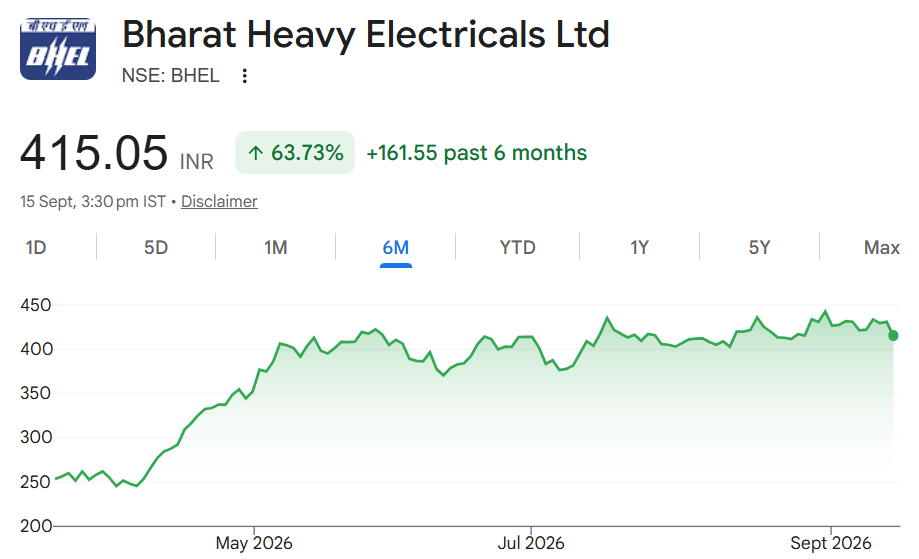
BHEL’s partnership with Titagarh for 35-year maintenance of Vande Bharat sleeper trains could support recurring revenue under its existing train contract. Its financial recovery adds context, with Q1 FY27 consolidated profit reaching ₹376.71 crore, reversing a year-earlier loss.
The long-term potential will depend on timely deliveries, maintenance profitability and cash generation. With the supplied chart showing a 63.73% six-month rally, a key question is how much future growth is already reflected in the share price.
Titagarh Rail Systems Stock: Watch Delivery and Service Readiness
For Titagarh rail system, the latest agreement advances the maintenance structure around its existing sleeper-train programme. Its board had approved forming the JV in March 2026, making September’s signing part of a longer implementation process rather than the start of an entirely new project.
The business opportunity is to remain involved after trains are delivered. The challenge is to expand manufacturing and service capabilities without allowing costs, working-capital requirements or delays to erode the benefit.
Investors applying stock market ai tools to Titagarh’s disclosures should distinguish signed orders, production targets and completed deliveries. Those stages carry different levels of certainty, even when they appear together in an upbeat company update.
Should Investors Buy BHEL or Titagarh After the News?
The agreement alone is insufficient to establish a buy case for either stock. A business can have an attractive opportunity while its shares already reflect optimistic assumptions about future profits.
For someone following an ai trading signal, the relevant checks include the signal’s time horizon, liquidity and downside exposure. A long-term investor needs a different assessment: how much sustainable profit could emerge, what capital is required and what valuation is reasonable.
Similarly, research found through ai based stock trading india searches should be checked against company disclosures before it influences an investment decision. An automated summary that treats the entire project value as new revenue can materially distort the opportunity.
Investors comparing railway companies with festive stocks should also separate the earnings drivers. Seasonal consumer spending and multi-year railway contracts operate on different timelines; an appealing September theme does not make their cash flows comparable.
How Should This Fit Into Your Portfolio?
Before adding either company, review how much of your portfolio already depends on government spending, industrial investment or large project execution. Owning several businesses exposed to similar spending cycles can leave a portfolio more concentrated than the number of holdings suggests.
If you are exploring jarvis investment options, begin with your investment horizon, existing sector exposure and ability to tolerate price declines. Those factors should determine how a railway opportunity fits into your plan. You can explore Jarvis Invest portfolio management services to assess that broader fit.