
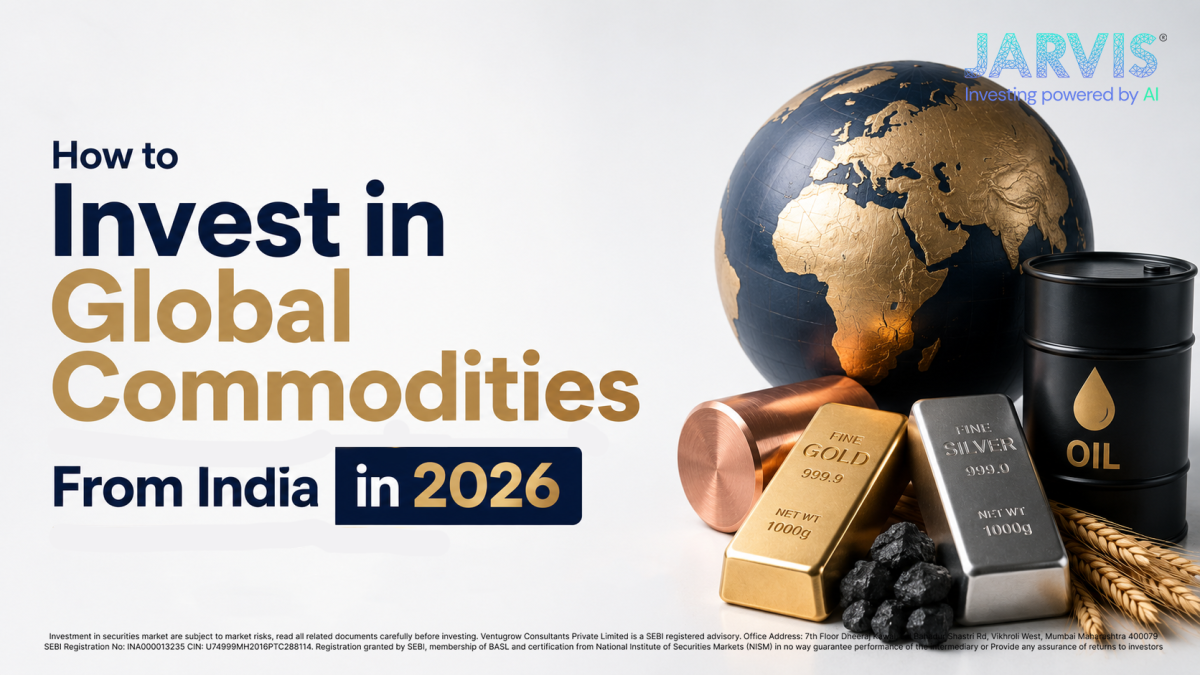

The global commodities market is back. With inflation, global tensions, and shifting interest rates all impacting the financial markets, commodities are once again capturing investors’ attention. Gold, silver, and oil are all investment opportunities to consider, whether you’re thinking of them as safe-haven assets, industrial gold or silver, or diversifying your portfolio with oil. This guide will provide you with the knowledge and strategies to navigate the investment landscape of commodities in 2026 as an Indian investor.
What’s Making Commodities a Hot Topic in 2026
Commodities are different from stocks in that their value arises from physical entities like metals, energy sources, and agriculture. The prices of commodities are affected by supply and demand issues, inflation, foreign exchange rates, macroeconomic indicators in the world economy, and political events.
In 2026, gold will continue to be in demand because of its ability to hedge against inflation, while oil prices will be affected by supply changes around the globe and by politics. Silver will also be supported by an increase in demand for use in industries such as renewables, EVs, and electronics. Consequently, commodities enable diversification of investment portfolios by exposure to global macroeconomic trends
Learn the significance of the Three Major Commodities.
Gold
Gold has always been considered to be a good store of value in times of inflation and volatility in the markets. Investors tend to keep a portion of their investments in gold since it’s historically acted differently from stocks when the markets are uncertain.
There are various ways Indian investors can invest in gold:
Gold ETFs are among the easiest investments to make, as they mirror the price of gold in the country and also help keep away from the issues of storing, pureness and insurance.
Silver
Silver is both a precious metal and an industrial commodity. Its demand comes from investors as well as industries such as solar energy, electric vehicles (EVs), consumer electronics, and medical equipment. This dual demand makes silver more volatile than gold while also supporting its long-term growth potential
There are several ways for Indian investors to invest:
Silver ETFs
Silver Mutual Funds
MCX Silver Futures
International Silver ETFs
Silver ETFs give exposure without storage costs, and ensure high purity holding, regulated by SEBI guidelines, unlike physical silver.
Oil
Oil continues to be one of the world’s most actively traded commodities.
This is because it is affected by a number of macro-economic considerations, such as:
Global Demand
OPEC+ Production Decisions
Geopolitical Tensions
Supply Chain Disruptions
US Dollar Strength
Oil investments are usually made through ETFs, commodity funds, or futures. Because prices can fluctuate sharply, they are generally suitable for experienced investors.
How Indians can invest in Global Commodities
1. Gold & Silver ETFs
A simple way to invest in precious metals is via Exchange Traded Funds or ETFs.
- Some advantages include:
- No storage concerns
- High liquidity
- Convenient account to buy and sell stocks, with Demat accounts.
- Transparent pricing
- Portfolio diversification
2. Sovereign Gold Bonds (SGBs)
The Government of India offers Sovereign Gold Bonds through the RBI at specific times during the year. The bonds give investors exposure to the price of gold and pay interest at regular intervals. Often favored by those who invest for the long-term due the absence of storage concerns with carrying physical gold.
3. MCX Gold & Silver Futures
Experienced investors can trade gold and silver futures on the Multi Commodity Exchange (MCX). While smaller contracts like Gold Mini, Gold Petal, and Silver Mini improve accessibility, futures use leverage, making them more suitable for short-term traders than long-term investors.
4. Commodity Mutual Funds
Commodity-focused mutual funds offer an indirect exposure to commodity by investing in stocks of mining companies, energy firms, commodity-related stocks or commodity ETFs.
They are appropriate for investors who wish to invest in funds that are professionally managed, but do not want to engage in direct commodity trading.
5. Global Commodity ETFs
Indian investors seeking a wider exposure to global markets can invest in global commodities ETFs with the help of the Liberalised Remittance Scheme (LRS) introduced by the RBI.
These ETFs can be linked to:
- Gold
- Silver
- Oil
- Energy companies
- Broad commodity indices
This allows investors to spread the risk off the domestic commodity market.
What is Making the Prices of Goods?
Knowing what makes a particular investment product worth its price is as crucial as picking the investment product.
| Commodity | Major Price Drivers |
|---|---|
| Gold | Inflation, interest rates, central bank purchases, economic uncertainty |
| Silver | Industrial demand, manufacturing growth, renewable energy adoption |
| Oil | OPEC+ production, geopolitical tensions, global demand, supply disruptions |
Commodities tend to be more sensitive to macroeconomic events and excesses of supply and demand, as opposed to the equity market which mainly reacts to company earnings.
How AI is transforming commodity Investing
The commodity markets produce all sorts of economic, geopolitical and market data every day. It can be hard for individual investors to track these variables on their own.
Investment platforms that leverage artificial intelligence are increasingly capturing a range of macroeconomic influences, such as the trend of inflation, the movement of the currency, energy supply, and cycles of commodity prices.
By analyzing global economic indicators, rather than just past price trends, Jarvis Atlas uses AI to gain insight into market dynamics, allowing investors to make informed decisions on commodities trading. This allows investors to take advantage of the opportunities available to them based on data, rather than emotions.
Before you invest, there are several things you should take into account.
Before spending funds on commodities, you ought to ask yourself:
- What do you want to accomplish?
- What level of volatility are you willing to deal with?
- Do you invest for diversification or trading?
- Is the investment in line with your financial objectives?
- Have you comprehended the tax and expenses involved?
Commodities offer an opportunity for portfolio diversification; however, they should be used along with and not in place of a diversified investment portfolio.
Final Thought
Commodities can strengthen a diversified portfolio by offering exposure to inflation, industrial demand, and global economic trends. Indian investors can access gold, silver, and oil through ETFs, mutual funds, MCX futures, Sovereign Gold Bonds, and global investment platforms. AI-powered tools like Jarvis Atlas further support investors by tracking commodity cycles and macroeconomic signals, helping them make more informed investment decisions.