
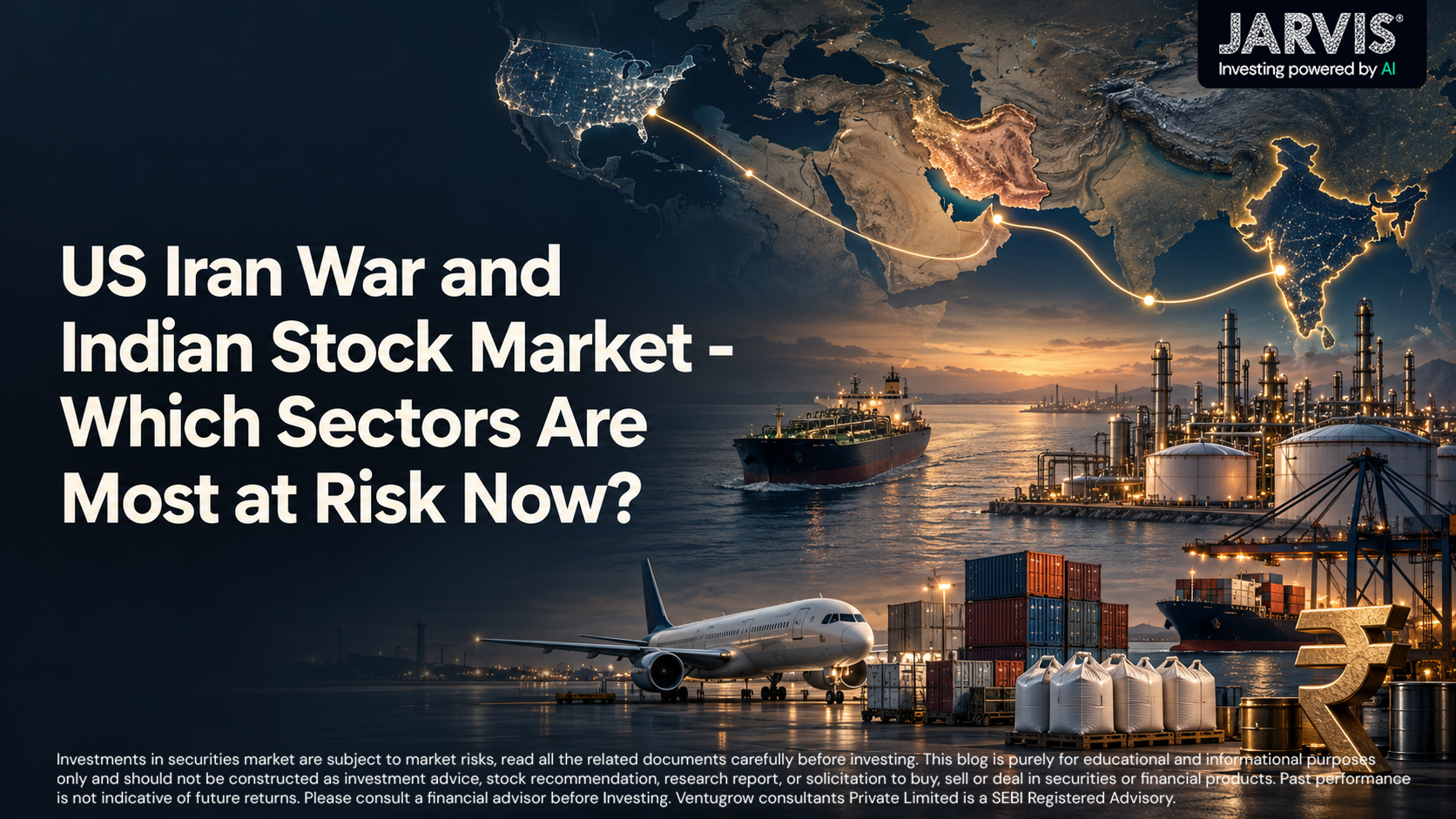
When tensions escalate in the Middle East, Indian stock market investors often watch one number closely: crude oil prices. Rising oil prices can increase India’s import bill, weaken the rupee, fuel inflation and squeeze corporate profits. The US Iran War can therefore influence everything from airline earnings to the cost of manufacturing everyday products.
On October 19, 2026, Brent crude remained above $107 per barrel amid tensions surrounding the Strait of Hormuz. Indian equities also came under pressure, with the Nifty 50 falling below 22,900 as investors assessed geopolitical risks and domestic earnings.
For investors, the important question is not simply whether the market will fall, but which sectors are most exposed and how prolonged disruptions could affect their earnings.
Why the US-Iran Conflict Matters to India
India imports a substantial share of its energy requirements. According to CRISIL Ratings, approximately 85% of India’s crude oil requirements are imported, while around 40 – 50% of crude imports and 50 – 60% of LNG imports typically pass through the Strait of Hormuz.
Disruptions to this critical shipping route can push up energy prices, freight charges and insurance costs. Higher oil prices can also widen India’s current account deficit and put pressure on the rupee, making imported raw materials more expensive.
The duration of the conflict matters. A short-lived price spike may have a limited impact, while sustained high energy prices can affect inflation, consumption and corporate profitability.
1. Aviation: Rising Fuel Costs, Tighter Margins
Airlines are directly exposed to crude oil prices because aviation turbine fuel represents a significant operating expense. When fuel prices rise, airlines may face shrinking margins unless they can increase ticket prices. However, higher fares can weaken demand, particularly among price-sensitive travellers.
Flight disruptions, longer routes and higher insurance costs can add further pressure. Investors tracking aviation stocks should monitor fuel expenses, passenger demand, ticket pricing and operating margins to understand how companies are managing the shock.
2. Oil Marketing Companies: Pressure on Fuel Margins
Indian Oil Corporation, Bharat Petroleum and Hindustan Petroleum purchase crude oil and sell refined petroleum products. When crude prices rise rapidly, these companies can face pressure if retail fuel prices do not adjust sufficiently to cover higher costs.
However, the impact depends on government pricing decisions, refining margins and inventory gains or losses. Upstream oil producers may benefit from higher realisations, although their performance also depends on production costs and pricing arrangements. The distinction is important: higher oil prices do not affect every energy company in the same way.
3. Paints, Chemicals and Tyres: The Input-Cost Squeeze
Paint stocks manufacturers, speciality chemical stocks companies and tyre producers depend on crude-linked materials, including solvents, petrochemical derivatives and synthetic rubber. If these inputs become more expensive, companies must either absorb the additional costs or raise product prices. Absorbing the increase can reduce margins, while price hikes may affect demand in competitive markets.
Businesses with strong pricing power, efficient procurement and healthy balance sheets may be better equipped to manage these pressures. Investors should watch raw-material costs, inventory levels and operating margins rather than relying solely on share-price movements.
4. Fertilisers, LNG and Energy-Intensive Industries
Natural gas is an important input for fertiliser production and several industrial processes. Disruptions to LNG supplies can raise costs for fertiliser manufacturers, ceramics producers and other energy-intensive businesses. Alternative supplies may be available, but securing them can be more expensive or complicated.
Fertiliser companies are also affected by government subsidies and pricing policies, which can influence how input-cost changes affect earnings. CRISIL Ratings has identified ceramics, fertilisers and certain crude-linked industries among the sectors requiring attention during prolonged Middle East disruptions.
5. Logistics, Shipping and Consumer Businesses
Higher freight charges, fuel costs and marine insurance premiums can affect logistics companies, shipping operators and businesses dependent on international trade. Importers may face more expensive raw materials, while exporters can encounter delayed shipments and higher transportation expenses.
These costs can weigh on profitability when companies cannot pass them on to customers. The impact may also reach consumer businesses. If energy prices push inflation higher, households could have less disposable income for vehicles, travel and other discretionary purchases.
Which Sectors Could Be Relatively Resilient?
Some domestic-facing businesses may have less direct exposure to imported energy. Select pharmaceutical sector stocks, telecom stocks and essential-consumer companies may benefit from more resilient demand or different cost structures. However, no sector is completely insulated.
IT companies can be affected by global economic uncertainty, while pharmaceutical businesses may face higher freight and packaging costs. Defence stocks companies may attract investor attention during periods of geopolitical tension, but the conflict does not automatically translate into immediate orders or stronger earnings.
What Should Investors Monitor?
Investors should track Brent crude, the USD-INR exchange rate, shipping costs and developments affecting the Strait of Hormuz. At the company level, operating margins, debt, pricing power and cash flow can reveal whether a business is absorbing the shock or passing costs on to customers.
Data-driven investment research platforms such as Jarvis Invest can complement this analysis by helping investors evaluate financial trends and portfolio risks. However, no tool can predict every geopolitical development or eliminate market risk.
Final Thoughts
The US – Iran conflict can affect Indian equities through higher energy prices, currency pressure and supply-chain disruptions. Aviation, oil marketing, paints, chemicals, tyres and energy-intensive industries are particularly sensitive to prolonged cost increases.
The crucial question is not simply whether crude prices rise, but how long they stay elevated and which companies can protect their profitability.
A portfolio review should connect these developments with what you own. Which companies face rising costs? Which can protect margins? And does your allocation remain suitable for your risk profile and investment horizon?
For investors looking to build a long term portfolio with a more structured process, Jarvis Portfolio offers AI-driven portfolio recommendations tailored to individual risk profiles and investment goals. Reviewing how the approach works, its charges and its suitability can help you decide whether it fits your investment needs.


